Anxiety and Sleep Problems: Symptoms, Causes & UK Help
Quick Answer
Anxiety can make it harder to fall asleep, stay asleep or return to sleep after waking. Poor sleep can then increase emotional reactivity, physical tension, worry and difficulty coping the next day. This two-way pattern can become a self-reinforcing cycle, but it is not proof that every sleep problem is caused by anxiety or that every anxious feeling comes from lack of sleep.
The useful question is not only “which came first?” It is which factors are keeping the cycle going now: persistent worry, fear of not sleeping, irregular routines, caffeine or alcohol, pain, menopause, medicines, sleep apnoea, restless legs, depression, trauma or another condition. Treatment works best when both the sleep problem and the anxiety are assessed.
Key Takeaways
- Anxiety and sleep influence each other in both directions.
- Racing thoughts, muscle tension, palpitations and clock-watching can delay sleep, but similar symptoms may have physical causes.
- Insomnia means more than one bad night; duration, frequency, daytime impairment and opportunity to sleep matter.
- CBT-I is recommended for persistent insomnia, while anxiety may need its own psychological or medical treatment.
- Snoring with breathing pauses, mania, severe withdrawal or immediate self-harm risk needs more than sleep-hygiene advice.
What Is the Link Between Anxiety and Sleep?
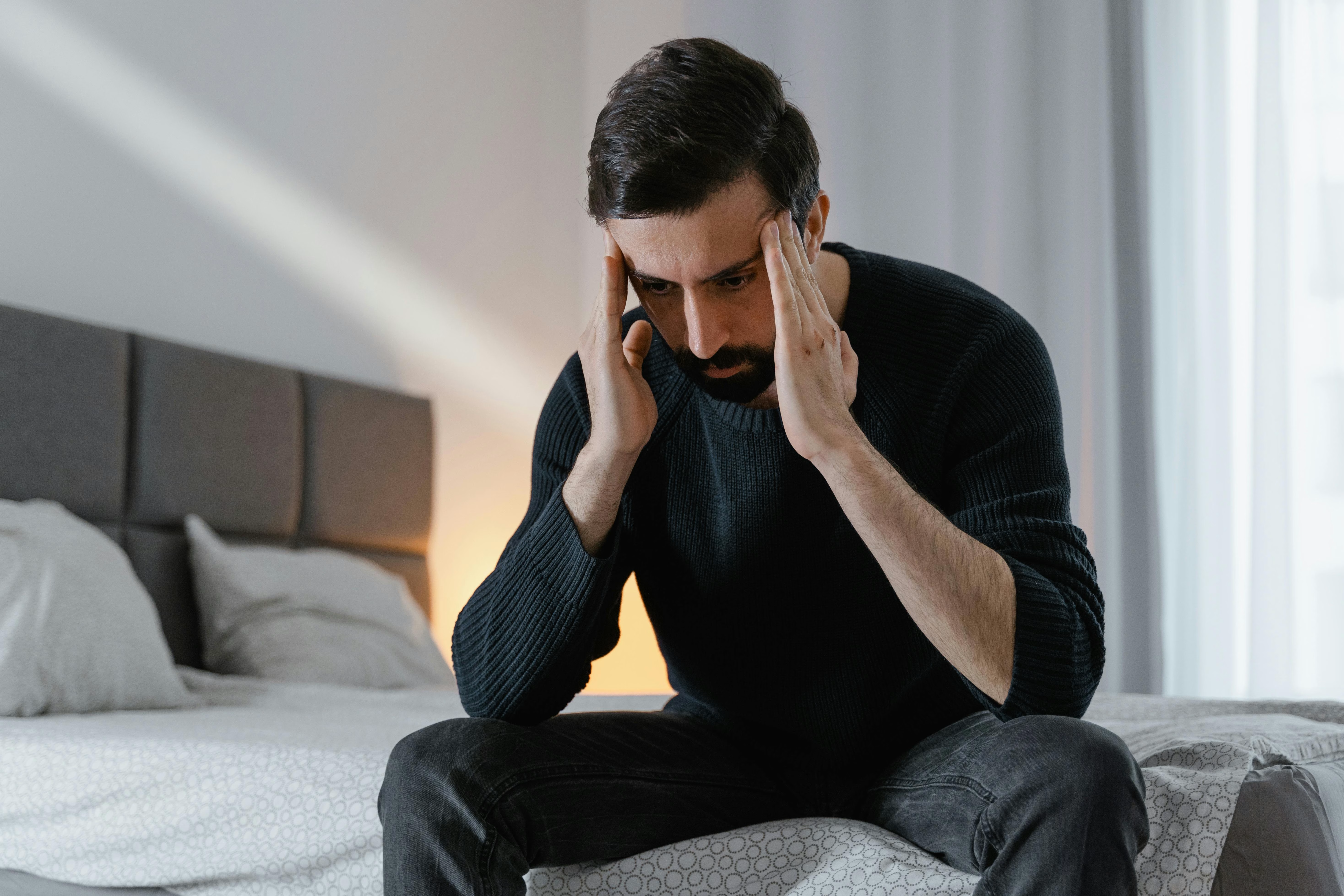
Anxiety activates threat-monitoring systems. At bedtime, there are fewer distractions, so worries may feel louder. Physical arousal—faster heartbeat, shallow breathing, sweating or muscle tension—can be misread as evidence that something is wrong. After several difficult nights, the bed itself may become a cue for alertness. The person starts monitoring the clock and calculating tomorrow’s damage, which makes sleep less likely.
Poor sleep can reduce attention, patience and emotion regulation. Normal problems then feel harder to manage. This does not mean a sleepless night permanently damages mental health. It means repeated sleep disruption can lower coping capacity and should be addressed alongside the anxiety, especially when daytime function is affected.
Direction | Common pathway | What the person may notice |
Anxiety to sleep | Worry, threat monitoring and physical arousal delay sleep or cause waking | Racing thoughts, tense body, checking time, fear of bedtime. |
Sleep to anxiety | Fatigue and reduced emotional regulation make threat feel stronger | Irritability, poor concentration, more worry and physical sensitivity. |
Shared cause | Stress, pain, trauma, hormones, substances, medicines or another disorder affect both | Symptoms change together without a simple one-way cause. |
Learned cycle | Bed and night become associated with effort, frustration and monitoring | Feeling sleepy elsewhere but suddenly alert in bed. |
Symptoms of Anxiety-Related Sleep Problems
At bedtime
Common experiences include racing thoughts, replaying conversations, planning repeatedly, imagining worst-case outcomes, feeling unable to switch off, muscle tension, a pounding heart, stomach discomfort and an urge to check messages or the time. These symptoms support a possible anxiety pattern but are not a diagnosis.
During the night
A person may wake frequently, become alert after a dream, experience a nocturnal panic attack or worry that waking means the entire next day will fail. Nightmares can occur with stress or trauma. Breathing pauses, choking, loud snoring or repeated morning headaches suggest assessment for sleep apnoea rather than assuming anxiety alone.
The following day
Fatigue, slowed thinking, irritability, low motivation and increased sensitivity to bodily sensations are common after poor sleep. Some people compensate with long naps, extra caffeine, going to bed very early or cancelling activity. These responses may provide short-term relief but can reduce sleep pressure or strengthen fear of poor sleep.
Pattern | Possible explanation | Needs prompt review when… |
Difficulty falling asleep with worry | Anxiety, conditioned arousal, caffeine or stress | It persists, impairs daytime life or is accompanied by severe mood symptoms. |
Waking with racing heart | Panic, nightmare, reflux, breathing disorder, medicine or arrhythmia | There is chest pain, fainting, severe breathlessness or a new irregular heartbeat. |
Early waking and low mood | Depression, anxiety, stress or circadian change | Hopelessness, self-harm thoughts or inability to function develops. |
Very little sleep without tiredness | Possible mania or hypomania, substance or medicine effect | There is unusual energy, risky behaviour, rapid speech or loss of judgement. |
Snoring, gasping and daytime sleepiness | Possible obstructive sleep apnoea | Driving or work safety is affected, or breathing pauses are witnessed. |
What Causes Anxiety and Sleep Problems?
Stress and generalised worry
Work, money, housing, health, study, relationships and caring responsibilities can continue mentally after the day ends. Generalised anxiety involves excessive worry across several areas and is not diagnosed from sleep difficulty alone. Persistent worry, physical tension and functional impact deserve assessment.
Fear of not sleeping
After repeated bad nights, sleep can become a performance task. Trying harder, checking the clock and extending time in bed often increase wakefulness. CBT-I addresses this learned cycle through methods such as stimulus control, a consistent schedule and changing unhelpful beliefs about sleep; it is more than a list of sleep-hygiene tips.
Mental and physical health conditions
Depression, PTSD, panic disorder, OCD and some neurodevelopmental conditions may affect sleep in different ways. Pain, menopause symptoms, hyperthyroidism, reflux, asthma, restless legs and sleep apnoea may also disturb sleep and mimic or worsen anxiety. New symptoms need a broad review rather than immediate self-diagnosis.
Medicines and substances
Caffeine, nicotine, alcohol, stimulants and recreational drugs can influence both sleep and anxiety. Some prescription medicines may cause activation, vivid dreams, sedation or withdrawal symptoms. Alcohol can make a person sleepy at first but fragment later sleep. Do not abruptly stop antidepressants, benzodiazepines, Z-drugs or other regular medicines; ask a clinician to review timing and risk.
How Are Anxiety and Sleep Problems Assessed?
A useful assessment covers sleep schedule, time awake, daytime impact, anxiety symptoms, mood, trauma, physical health, medicines, substances, work pattern and safety. A sleep diary for one to two weeks may reveal patterns. Wearables can estimate rest and movement but do not diagnose insomnia, anxiety or sleep apnoea. Excessive checking can itself increase sleep worry.
Question | Why it matters |
Did worry start before the sleep problem, after it, or both together? | Helps identify triggers without forcing a single cause. |
Is there enough time and a suitable opportunity to sleep? | Separates restricted sleep opportunity from insomnia symptoms. |
Are there snoring, gasping, leg sensations, pain or hormonal symptoms? | Points towards sleep or physical conditions needing assessment. |
What medicines, caffeine, nicotine, alcohol or drugs are used? | Identifies activation, sedation, interactions or withdrawal. |
How are work, driving, mood and safety affected? | Guides urgency and treatment intensity. |
What Helps?
Immediate steps that reduce arousal
If you are awake and becoming more distressed, stop forcing sleep. Use low light, avoid repeated clock-checking and choose a quiet, non-stimulating activity until sleepiness returns. Slow breathing or progressive muscle relaxation may help some people. These tools lower arousal; they are not tests you can fail.
Strengthen the sleep system
Keep a reasonably consistent wake time, seek daylight earlier in the day, use daytime movement appropriate to your health, and reduce late caffeine. Keep naps short or avoid them when they reduce night-time sleep pressure. Make changes gradually enough to learn what helps rather than starting ten rules at once.
Treat persistent insomnia with CBT-I
NICE CKS recommends cognitive behavioural therapy for insomnia for short- and chronic insomnia in adults. CBT-I may include stimulus control, sleep scheduling or restriction delivered safely, cognitive work and relapse planning. Sleep restriction should be adapted or supervised when bipolar disorder, epilepsy, untreated sleep apnoea, high-risk driving or other safety issues are present.
Treat the anxiety as well
NHS Talking Therapies provides NICE-recommended treatments for anxiety and depression in England. Treatment may include guided self-help or CBT depending on need. A GP can review physical causes and discuss medicine when appropriate. Sleeping pills are not a general treatment for an anxiety disorder and are usually not the first answer to persistent anxiety-related insomnia.
When to Seek Help
Speak to a GP when sleep difficulty has lasted for months, self-help has not helped, daytime life is affected, anxiety is persistent, or physical symptoms suggest another cause. Seek urgent help for rapidly worsening mental state, serious withdrawal concerns or inability to function safely. Call 999 or go to A&E for immediate self-harm danger, collapse, seizure, severe breathing difficulty or inability to keep yourself safe.
Important Conditions That Can Look Like Anxiety-Related Insomnia
Sleep apnoea and breathing problems
Obstructive sleep apnoea can cause repeated breathing pauses, gasping, loud snoring, fragmented sleep, morning headaches and daytime sleepiness. Waking with a racing heart may feel like panic. Sedatives may be unsuitable or require extra caution when breathing is impaired, so the answer is assessment rather than adding another sleep aid.
Restless legs, pain and reflux
An urge to move the legs, uncomfortable sensations that worsen at rest, pain when lying down or reflux after meals can repeatedly interrupt sleep. The resulting frustration can create secondary anxiety. Treating only the worry misses the physical driver, while treating only the body may miss a learned insomnia cycle that continues after symptoms improve.
Depression, trauma and bipolar symptoms
Depression may involve early waking, oversleeping, low mood and loss of interest. Trauma may bring nightmares and a sense of danger at night. A period of very little sleep with unusually high energy, rapid speech, impulsive decisions or reduced need for sleep may suggest mania or hypomania and needs prompt assessment. Standard sleep restriction or unsupervised antidepressant changes are not appropriate substitutes for that review.
How Progress Should Be Measured
Success is not always eight uninterrupted hours. More useful outcomes include less fear at bedtime, fewer long awake periods, improved daytime functioning, safer driving, reduced reliance on alcohol or sedatives and better ability to respond to a poor night. Review trends over weeks rather than judging treatment by one night. If the plan increases sleepiness, falls, agitation or risk, contact the clinician sooner.
Common Sleep-Anxiety Myths
Myth | Evidence-led correction |
“I must get eight hours every night.” | Sleep need varies. Regularly impaired daytime function matters more than hitting one universal number. |
“More time in bed guarantees more sleep.” | Extending time in bed can increase awake time and weaken the bed–sleep association in insomnia. |
“A bad night will ruin tomorrow.” | Performance may be affected, especially for safety-critical tasks, but catastrophic predictions can intensify the cycle. |
“If I cannot sleep, my body has forgotten how.” | Sleep is biologically regulated. Insomnia often involves timing, arousal and learned patterns that can be treated. |
“One sleep score tells me what is wrong.” | Consumer trackers estimate patterns and cannot diagnose insomnia, anxiety or a breathing disorder. |
The goal is flexible confidence around sleep, not perfect control. A person can follow a sensible plan and still have an occasional poor night. Treatment becomes more durable when it reduces fear and restores daytime life rather than making sleep the centre of every decision.
Frequently Asked Questions
Can anxiety cause insomnia?
Yes. Worry and physical arousal can delay sleep, cause waking and create fear around bedtime.
Can insomnia cause anxiety?
Repeated poor sleep can increase emotional reactivity and worry, but it is not the only possible cause of anxiety.
What is sleep anxiety?
It is a common descriptive phrase for fear or worry about sleep; it is not automatically a separate formal diagnosis.
Why does my heart race at bedtime?
Anxiety is one possibility, but caffeine, medicines, reflux, thyroid problems and heart rhythm conditions may also matter.
Should I stay in bed until I sleep?
If lying awake makes distress worse, CBT-I principles often use a quiet activity outside bed until sleepiness returns.
Do sleeping pills fix anxiety-related insomnia?
They may help selected short-term sleep problems but do not treat every anxiety cause and carry medicine-specific risks.
Can CBT help both problems?
CBT can treat anxiety, and CBT-I specifically treats insomnia. Some people need both or an integrated plan.
Does alcohol help sleep anxiety?
It may feel sedating initially but can fragment sleep and worsen later-night waking and anxiety.
When should I consider sleep apnoea?
Loud snoring, gasping, witnessed breathing pauses, morning headaches and marked daytime sleepiness need assessment.
When is it an emergency?
Immediate self-harm risk, severe breathing difficulty, collapse, seizure, psychosis or inability to stay safe needs emergency help.
Related Guides
For broad wellbeing and support, read Mental Health and How to Manage It.
For bedtime-specific triggers and same-night actions, read Why Does My Anxiety Increase at Night?.
For long-term insomnia care, read Insomnia Treatment in the UK.
Sources
- NHS: Mental health
- NHS: 5 steps to mental wellbeing
- NHS: Anxiety, fear and panic
- NHS: Insomnia
- NHS Every Mind Matters: Sleep
- NHS England: Talking Therapies
- NHS Digital: Adult Psychiatric Morbidity Survey 2023/24
- NICE CKS: Insomnia
- Mind: Sleep and mental health
- Mental Health Foundation: Sleep and mental health
Conclusion
Anxiety and sleep problems can reinforce each other, but a strong plan looks beyond the loop. Identify what starts and maintains the problem, rule out physical and medicine-related causes, reduce bedtime arousal, strengthen the sleep system and use CBT-I or anxiety treatment when symptoms persist.
Mental-health symptoms can have several causes and need individual assessment.
Use prescription medicines only as prescribed for you.
Do not start, stop or change a mental-health or sleep medicine without qualified advice.
Call 999 or go to A&E if there is immediate danger or you cannot keep yourself safe.