Zopiclone 3.75mg vs 7.5mg: UK Comparison Guide
Medical information: This article provides general educational information. Zopiclone is a prescription-only medicine in the UK. Never start, stop, split, combine or change your dose without advice from your prescriber or pharmacist.
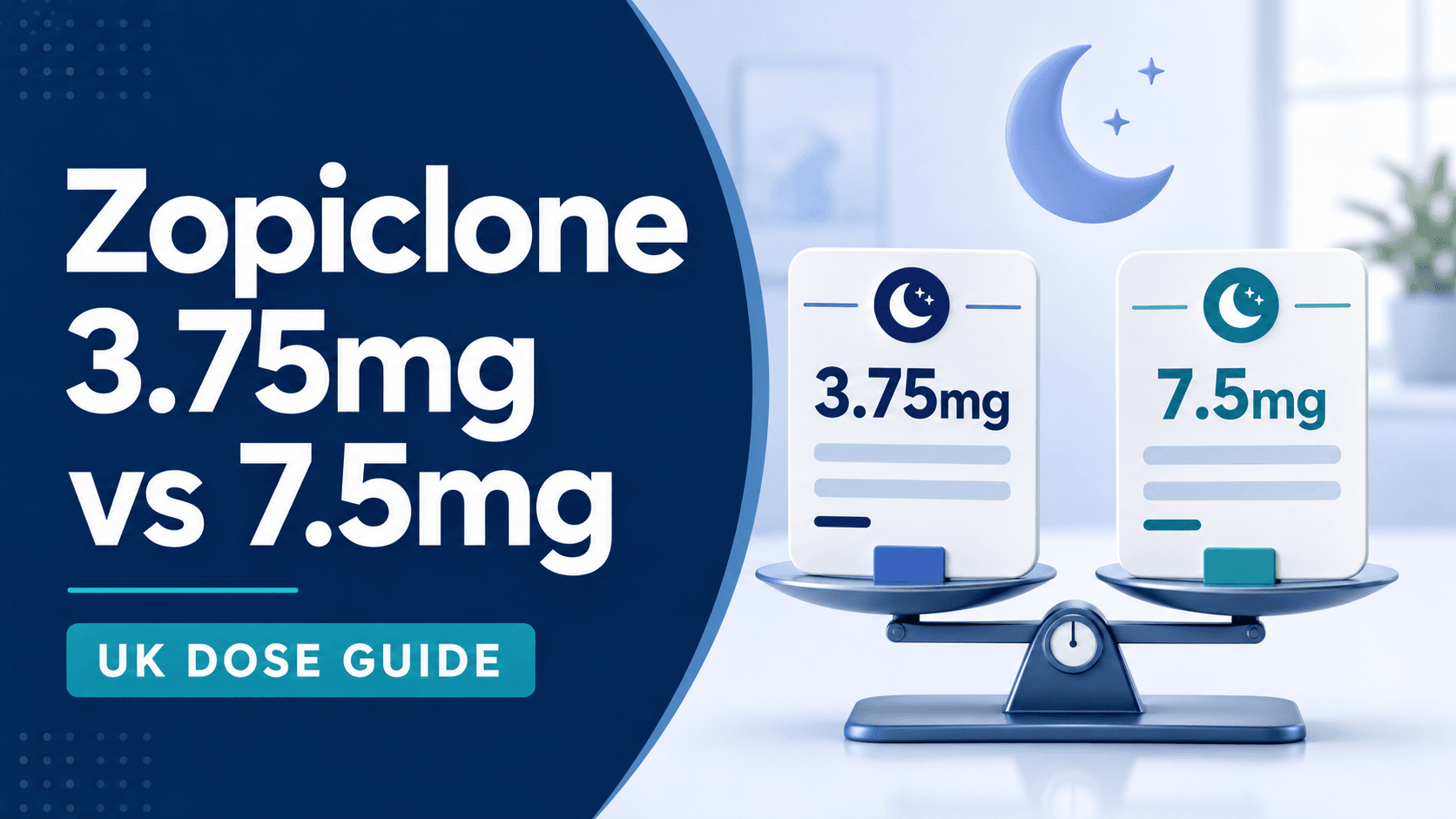
The main difference between zopiclone 3.75mg and 7.5mg is their strength. Both tablets contain the same active medicine, but a 3.75mg tablet contains half the amount found in a 7.5mg tablet.
Zopiclone 3.75mg is commonly used as a lower starting dose for older adults and may also be considered for certain people with liver, kidney or chronic breathing problems. Zopiclone 7.5mg is the recommended adult dose in current UK product information when clinically suitable.
However, a higher dose is not automatically better. The correct strength depends on your age, health, other medicines, response to treatment and risk of side effects.
Takeaways
- Both strengths contain the same active medicine: zopiclone.
- A 3.75mg tablet contains half as much zopiclone as a 7.5mg tablet.
- The 3.75mg strength is commonly used as a starting dose in older adults.
- The 7.5mg strength is the recommended adult dose when clinically suitable.
- Both strengths may cause next-day drowsiness, falls, dependence and withdrawal.
- Never take another dose during the same night.
- Never increase, reduce or stop your dose without professional advice.
Zopiclone 3.75mg vs 7.5mg: Quick Comparison
Feature | Zopiclone 3.75mg | Zopiclone 7.5mg |
Active medicine | Zopiclone | Zopiclone |
Amount per tablet | 3.75mg | 7.5mg |
Relative strength | Half of 7.5mg | Twice 3.75mg |
Typical UK role | Lower starting strength | Recommended adult dose when suitable |
Older adults | Common starting dose | May be considered later if clinically necessary |
Selected liver, kidney or breathing problems | May be used as a starting dose | Requires greater caution |
Next-day impairment | Still possible | Still possible and potentially more concerning |
Dependence and withdrawal | Possible | Possible |
Dose selection | Prescriber-led | Prescriber-led |
The comparison is based on current electronic Medicines Compendium product information and NHS zopiclone guidance.
What Do Both Strengths Have in Common?
Both strengths contain zopiclone, a hypnotic medicine commonly described as a Z-drug. It affects calming pathways in the brain and may help some adults:
- fall asleep more quickly;
- wake less often during the night; or
- avoid waking too early.
The two strengths are not different medicines. Zopiclone 3.75mg is also not a natural or risk-free version of the 7.5mg strength.
Both can cause side effects such as:
- a bitter or metallic taste;
- dry mouth;
- dizziness;
- tiredness;
- poor coordination; and
- reduced alertness the following day.
Rare but serious effects can include breathing difficulties, allergic reactions, hallucinations and complex sleep behaviours such as sleepwalking or performing activities while not fully awake.
The NHS describes zopiclone as a short-term treatment for insomnia. Treatment normally lasts from a few days to a few weeks and is generally not continued beyond four weeks because tolerance and dependence can develop.
What Is the Main Difference Between 3.75mg and 7.5mg?
The key difference is the amount of active medicine.
A 3.75mg tablet contains exactly half the zopiclone found in a 7.5mg tablet. UK product information indicates that blood concentrations after taking 7.5mg are approximately double those seen after taking 3.75mg.
However, the effect can vary between individuals. It may be influenced by:
- age and frailty;
- liver and kidney function;
- other medicines;
- alcohol consumption;
- breathing conditions;
- available sleeping time; and
- personal sensitivity to sedatives.
The 7.5mg strength may produce a stronger sleep-promoting effect, but it can also increase exposure to unwanted effects.
Simple answer: Zopiclone 7.5mg is stronger, but stronger does not necessarily mean better. The aim is to use the lowest effective dose for the shortest necessary period.
When May Zopiclone 3.75mg Be Prescribed?
Zopiclone 3.75mg is a lower-strength option. Current UK product information recommends it as the starting dose for older adults.
A prescriber may also consider this strength when:
- the person is older or frail;
- there is an increased risk of falls or confusion;
- liver function may slow the removal of zopiclone;
- kidney impairment requires a more cautious start;
- the person has chronic breathing problems;
- sedating medicines have previously caused excessive drowsiness; or
- the treatment is being adjusted gradually under clinical supervision.
The lower strength can still affect balance, concentration, alertness and driving. It can also cause dependence and withdrawal.
“Lower dose” means lower exposure. It does not mean completely safe or free from side effects.
When May Zopiclone 7.5mg Be Prescribed?
The referenced UK product information lists 7.5mg as the recommended adult dose when zopiclone is clinically appropriate.
It is normally taken as one dose shortly before going to bed. A second dose must not be taken during the same night.
A 7.5mg prescription may be considered when an adult has severe, short-term insomnia that is affecting daily life and non-medicine approaches have not provided enough help.
Before prescribing it, a healthcare professional should consider:
- the cause and severity of the insomnia;
- other health conditions;
- other medicines;
- alcohol or substance use;
- possible interactions; and
- responsibilities such as driving or operating machinery the next day.
The 7.5mg strength should not be selected independently because 3.75mg feels weak or because one night of sleep was poor.
Is Zopiclone 7.5mg More Effective?
Zopiclone 7.5mg contains more active medicine and may have a stronger sedating effect. However, effectiveness is different for every person.
Some people may receive enough short-term benefit from 3.75mg, while others may be prescribed 7.5mg. A higher dose can also increase unwanted effects.
Think of the decision like adjusting the volume on a radio. The goal is not to select the loudest setting. The goal is to find the lowest setting that produces a clear result without unnecessary problems.
If zopiclone is not working as expected, the correct next step is a medical review—not an unsupervised dose increase.
Insomnia may continue because of:
- anxiety or depression;
- ongoing pain;
- caffeine or alcohol;
- menopause symptoms;
- shift work;
- sleep apnoea;
- restless legs;
- another medicine; or
- an irregular sleep routine.
Increasing sedation does not treat these underlying causes.
Benefits and Limitations
Strength | Potential advantage | Important limitation |
3.75mg | Lower exposure and a cautious starting option for higher-risk groups | May not provide enough benefit for everyone and can still cause falls, sedation and dependence |
7.5mg | Recommended adult dose in current UK product information when suitable | Higher exposure and not appropriate for every person |
Both | May provide short-term relief from severe insomnia | Neither strength treats the underlying cause of chronic insomnia |
Side Effects: Does Strength Matter?
Side effects can occur with either strength. Because 7.5mg provides a higher dose, dose-related effects may be more concerning, especially in someone who is:
- older or frail;
- sensitive to sedating medicines;
- at risk of falls;
- affected by liver or breathing problems; or
- taking other medicines that reduce central nervous system activity.
Common or important effects include:
- bitter or metallic taste;
- dry mouth;
- sleepiness or tiredness;
- feeling dazed the following day;
- dizziness or headaches;
- reduced coordination;
- concentration or memory problems;
- confusion or falls; and
- unusual behaviour or perception changes.
Seek prompt medical advice if hallucinations, severe confusion, worsening depression or complex sleep behaviour occurs.
Seek emergency help if someone is very difficult to wake, has slow or difficult breathing, has collapsed or may have taken more than prescribed.
How Does a Prescriber Choose the Strength?
A prescriber looks at more than the number printed on the tablet.
The assessment may include:
- how long the insomnia has lasted;
- how badly it affects daytime functioning;
- whether the problem involves falling asleep or staying asleep;
- previous responses to sleeping medicines;
- age, frailty and falls risk;
- memory or confusion concerns;
- liver, kidney and breathing health;
- possible sleep apnoea;
- pregnancy or breastfeeding;
- alcohol and substance use;
- history of medicine dependence;
- opioids or other sedating medicines;
- next-day driving or work responsibilities; and
- the proposed treatment length and stopping plan.
This is why two people with similar sleeping difficulties may be prescribed different strengths—or why one may be advised not to use zopiclone.
Common Dose-Change Mistakes to Avoid
- Increasing the dose after one poor night
- Sleep naturally varies from one night to another. One difficult night is not a safe reason to move from 3.75mg to 7.5mg.
- Taking a second dose during the night
- Zopiclone should be taken as a single dose and must not be taken again during the same night.
- Doubling a missed dose
- If you miss your bedtime dose, do not take two doses to make up for it. Follow your prescription label and patient leaflet.
- Splitting a 7.5mg tablet without checking
- Tablet designs and instructions can differ. The referenced product information instructs that its tablets should be swallowed whole without breaking. Ask your pharmacist about your exact product.
- Taking two 3.75mg tablets without instructions
- Two 3.75mg tablets contain 7.5mg in total, but this amount should only be taken when specifically directed on the dispensing label or by the prescriber.
- Stopping suddenly after regular use
- Abruptly stopping zopiclone may cause withdrawal symptoms or rebound insomnia. A gradual reduction may be required.
Driving and Next-Day Safety
The eMC product information warns that psychomotor impairment, including impaired driving, is more likely when:
- zopiclone is taken within 12 hours of an activity requiring full alertness;
- more than the recommended dose is taken;
- alcohol is consumed; or
- zopiclone is combined with other central nervous system depressants.
Plan for around seven to eight hours of uninterrupted sleep after taking the medicine.
Do not drive, cycle, use tools, operate machinery or perform safety-critical work if you feel sleepy, dizzy, dazed, confused or less alert—even if more than 12 hours have passed.
Zopiclone 3.75mg should not be considered a “driving-safe” dose. The lower strength can still cause next-day impairment.
Alcohol, Opioids and Other Sedating Medicines
Do not drink alcohol while taking zopiclone. The NHS warns that alcohol can increase its effects, potentially causing breathing problems and making someone extremely difficult to wake.
Combining zopiclone with opioids can result in severe sedation, respiratory depression, coma or death.
Tell your prescriber or pharmacist if you use:
- codeine, tramadol, morphine, oxycodone or other opioids;
- benzodiazepines;
- other sleeping medicines;
- sedating antihistamines;
- certain antidepressants;
- antipsychotic medicines;
- epilepsy medicines;
- muscle relaxants;
- cannabis or recreational substances; or
- herbal and over-the-counter sleep products.
These risks apply to both the 3.75mg and 7.5mg strengths.
Dependence, Tolerance and Withdrawal
In January 2026, the MHRA strengthened medicine warnings relating to addiction, dependence, tolerance and withdrawal for Z-drugs and several other medicines.
These terms have different meanings:
- Tolerance means the medicine appears to become less effective, leading someone to feel that a higher dose is needed.
- Dependence means the body has adapted to the medicine and withdrawal symptoms may occur after suddenly stopping or reducing it.
- Addiction can involve craving and difficulty controlling medicine use.
The risk generally increases with higher doses and longer treatment, but neither strength is free from risk.
Speak with a healthcare professional if:
- your medicine appears to be working less effectively;
- you feel that you need a higher dose;
- your tablets are running out early; or
- sleeping without zopiclone feels impossible.
Do not increase your dose or obtain extra tablets from another source.
How Long Are the Two Strengths Used?
Both zopiclone strengths are intended for short-term insomnia treatment.
Current UK product information says treatment should be as short as possible and should generally not exceed four weeks, including any gradual reduction period.
Taking the lower 3.75mg strength does not make long-term nightly use automatically appropriate.
If insomnia continues, repeatedly returns or lasts for several months, the treatment plan should focus on its underlying cause and longer-term interventions.
Long-Term Insomnia: Look Beyond the Dose
For chronic insomnia, NICE recommends cognitive behavioural therapy for insomnia as a first-line treatment for adults.
CBT-I addresses the thoughts, behaviours and sleeping patterns that keep insomnia going. Unlike a sleeping tablet, it aims to create longer-term improvements.
A longer-term plan may also include:
- maintaining a consistent wake-up time;
- getting morning daylight;
- reducing late caffeine and nicotine;
- avoiding alcohol near bedtime;
- reviewing pain or mental health symptoms;
- checking for sleep apnoea or restless legs;
- keeping a sleep diary;
- reducing disruptive daytime naps; and
- following a supervised stopping plan after regular zopiclone use.
Myths vs Facts
Myth | Fact |
Zopiclone 7.5mg is always better | It is stronger, but the most suitable dose is the lowest effective dose selected after clinical review |
Zopiclone 3.75mg cannot cause dependence | Both strengths can cause dependence, tolerance and withdrawal |
I should take 7.5mg if 3.75mg fails once | One poor night is not a safe reason to change your dose |
I can take another tablet if I wake during the night | Zopiclone should not be taken again during the same night |
The lower strength is safe with alcohol | Alcohol can dangerously increase sedation with either strength |
Everyone can drive safely after 12 hours | Do not drive whenever drowsiness or reduced alertness remains |
When Should You Speak With a Healthcare Professional?
Arrange a review with your GP, pharmacist or prescriber if:
- you do not understand why a particular strength was selected;
- the medicine is not working as expected;
- you experience next-day confusion, dizziness or poor balance;
- you need the medicine most nights;
- you have used it longer than planned;
- you want to increase, reduce or stop the dose;
- you take opioids or other sedating medicines;
- you drink alcohol while using it;
- you may have sleep apnoea; or
- insomnia is connected with worsening anxiety or depression.
Seek urgent medical help after taking more than prescribed.
Call emergency services if someone is very difficult to wake, has slow or difficult breathing, has collapsed, has a seizure or may have combined zopiclone with alcohol, opioids or unknown medicines.
Frequently Asked Questions
Is zopiclone 7.5mg stronger than 3.75mg?
Yes. A 7.5mg tablet contains twice the amount of zopiclone found in a 3.75mg tablet. However, it is not automatically better or suitable for every person.
Which zopiclone strength is safer?
Neither strength is universally safer. The lower dose provides less medicine, but both can cause next-day impairment, falls, dependence and withdrawal. Individual health and other medicines also affect safety.
Why are older adults often started on 3.75mg?
Older adults may be more sensitive to sedation, confusion and balance problems. Current UK product information recommends 3.75mg as a starting dose for older people.
Can I take two zopiclone 3.75mg tablets?
Two 3.75mg tablets contain 7.5mg in total. Only take this amount when your prescription label or prescriber specifically instructs you to do so.
Can I split a 7.5mg tablet to make 3.75mg?
Do not assume a tablet can be split. Product designs and instructions differ. Check the leaflet for your exact medicine and ask a pharmacist or prescriber.
Do both strengths start working at the same time?
Both contain the same active medicine. The NHS states that zopiclone normally begins working in approximately 30 to 60 minutes, although the timing and effect can vary.
Can 3.75mg affect driving the following day?
Yes. Zopiclone 3.75mg can still cause drowsiness, dizziness, poor concentration and slower reactions. Follow the 12-hour warning and never drive while affected.
How long can zopiclone 3.75mg or 7.5mg be used?
Both strengths are intended for short-term treatment. UK product information says treatment should be as short as possible and generally not exceed four weeks, including tapering, without clinical re-evaluation.
Conclusion
The essential difference between zopiclone 3.75mg and 7.5mg is strength. A 3.75mg tablet contains half the amount of active medicine found in a 7.5mg tablet.
The lower strength is commonly used as a starting dose in older adults and selected higher-risk groups. The 7.5mg strength is the recommended adult dose in current UK product information when clinically suitable.
The higher strength is not automatically better, and the lower strength is not risk-free. Both require a prescription, short-term planning, avoidance of alcohol and careful attention to next-day alertness.
Safe next step: If your current strength is not working or is causing side effects, speak with your GP, pharmacist or prescriber before taking another tablet or changing your dose.